
In our busy modern kitchens, we often chop potatoes and drop them straight into hot oil, only to find them turning soft, soggy, or sticking to the pan. Grandma’s fried potatoes or aloo podimas always had that perfect golden-brown exterior and a light, fluffy heart. The secret was a simple, patient ritual involving cold water and a pinch of salt.
The Traditional Benefit
Potatoes are naturally high in surface starch. When this starch meets hot oil immediately, it creates a gummy layer that prevents crisping and causes the potato to absorb excess oil. By soaking them, you reduce the glycemic load slightly and ensure a cleaner fry. This traditional step makes the potatoes lighter on the stomach and far more satisfying to the palate.
How to Follow This at Home
- The Uniform Cut: Slice or cube your potatoes into even sizes. This ensures they all finish cooking at the same time, preventing some from burning while others remain raw.
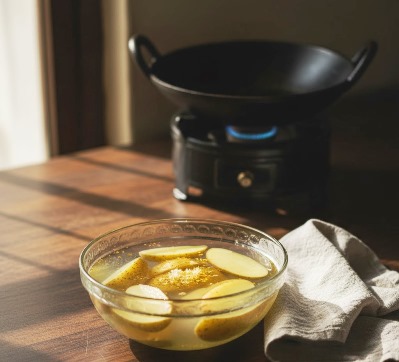
- The Ice-Cold Bath: Submerge the chopped potatoes in a bowl of ice-cold water for at least 20–30 minutes. You will notice the water turning cloudy; that is the excess starch being released.
- The Salt & Turmeric Addition: Add a teaspoon of rock salt and a pinch of turmeric to the soaking water. The salt draws out internal moisture, while the turmeric acts as an antiseptic and gives a beautiful base color.
- The Bone-Dry Rule: This is the most critical step. Before the potatoes hit the pan, drain them and pat them completely dry with a clean cotton kitchen towel. Any remaining water will cause the oil to sputter and steam the potato instead of searing it.
- The Slow-Start Fry: Start cooking on a medium flame to cook the inside, then increase the heat at the very end to achieve that final traditional “crunch.”
Why it Works
Cold water rinses away the surface sugars and starches that caramelize too quickly (and burn). The salt in the water creates a subtle osmotic pressure that firms up the potato’s cellular structure, making it less likely to break apart in the kadai. Removing the starch allows the hot oil to make direct contact with the potato skin, creating a rapid crisping effect known as the Maillard reaction.
Freshly cut potato wedges soaking in a clear glass bowl of water with a sprinkle of turmeric, alongside a dry cotton towel and a seasoned iron kadai.
Frequently Asked Questions
Does this work for sweet potatoes too?
Yes! In fact, sweet potatoes have even more sugar and starch, so soaking them is even more beneficial to prevent them from becoming too mushy when roasted or fried.
Can I soak them overnight?
Yes, you can store chopped potatoes in water in the fridge overnight. Just ensure they are fully submerged so they don’t turn brown (oxidize), and always dry them thoroughly before cooking.
A Balanced Grandma Perspective
Patience is the best ingredient in any recipe. By taking those twenty minutes to soak your vegetables, you are turning a simple side dish into a mindful preparation. It’s these small, traditional steps that transform ordinary food into a meal that is both healthy and a joy to eat.
👉 USA Lodge Cast Iron Griddle (Pre-seasoned)
👉 India SOLARA Crownstone Premium Cast Iron Tawa for roti and dosa

 Grandma’s Holistic Wellness
You are most welcome. Thanks for commenting.
LikeLiked by 1 person
Good tip! I did not know this, thanks! ~ Rosie
LikeLiked by 1 person