
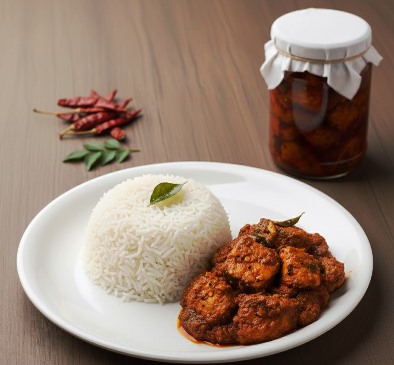
Fish pickle has long been a treasured preparation in traditional Kerala kitchens, especially in coastal homes. Made to preserve fish for longer periods, it was prepared with care using generous spices, oil, and vinegar. What began as a practical method of preservation is today enjoyed as a rich delicacy, valued for its deep flavour and nostalgic taste.
This spicy fish pickle is robust, tangy, and aromatic—perfect as a side dish with rice, kanji, or simple meals.
Why Fish Pickle Was Common in Traditional Homes
Long Shelf Life
Prepared to store fish safely before refrigeration was common.
Economical and Practical
Allowed families to preserve surplus fish without waste.
Travel-Friendly
Often carried during long journeys and pilgrimages.
Rich in Flavour
Strong spices and oil enhanced taste and preservation.
Traditional Fish Pickle Recipe
Ingredients
- ½ kg fleshy fish pieces
- 2 cups Kashmiri chilli paste
(soaked dried chillies, ground) - 1 teaspoon coriander powder
- 2 teaspoons pepper powder
- 1 teaspoon turmeric powder
- ¼ teaspoon fenugreek powder
- 2 pinches asafoetida (hing)
- 1 teaspoon mustard seeds
- 3 large pods garlic, sliced
- 1 three-inch piece ginger, finely chopped
- 20 curry leaves
- 4 tablespoons vinegar (preferably non-synthetic)
- Gingerly oil (nallenna / ellenna) for deep frying
- Salt – to taste
Method
- Wash the fish pieces thoroughly and drain excess water.
- Marinate with salt, turmeric powder, coriander powder, and pepper powder.
Rest for 15 minutes. - Heat the oil and fry the fish until dry and firm.
Remove, cool slightly, and carefully remove bones. Break into small pieces. - In another pan, heat gingerly oil. Can use the fish fried oil before its cool and if its not smokey or burned.
Add mustard seeds and allow them to splutter. - Add sliced garlic, chopped ginger, and curry leaves.
Sauté until moisture evaporates. - Add Kashmiri chilli paste, asafoetida, and fenugreek powder.
Cook on low flame until oil separates. - Add the fried fish pieces, vinegar, and salt.
Stir continuously on low flame until vinegar moisture evaporates and oil surfaces. - Turn off heat and allow the pickle to cool completely.
- Transfer to a clean, dry glass jar.
Avoid plastic or aluminium containers.
Traditional Storage Method
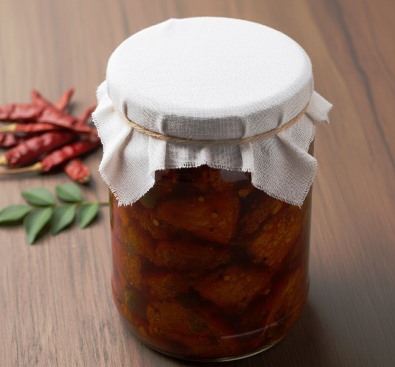
For long-term storage:
- Soak a clean white cotton cloth in vinegar
- Boil and cool it
- Place it over the pickle inside the jar to prevent fungal growth
Use a dry spoon each time. If consuming within a few days, the cloth may be removed.
Serving Suggestions
- With hot rice
- Alongside kanji
- As a flavourful side dish
Tips
- Always cook on low flame to prevent burning
- Use dry spoons only
- Ensure oil floats on top for better preservation
Who Should Be Careful
- Reduce chilli if sensitive to spice
- Consume in moderation if acidity is an issue
- Not recommended for children in large quantities
From Preservation to Delicacy
Once made out of necessity, traditional fish pickle is now cherished as a delicacy that reflects Kerala’s coastal wisdom, patience, and mastery of flavour.

 Grandma’s Holistic Wellness