
Kallappam is a traditional fermented rice pancake from Kerala. The name comes from the word “kallu” (toddy), which was originally used to ferment the batter. In olden days, yeast was not available, but toddy trees were plenty, and fresh toddy was commonly found in almost every household.
Today, the situation is the opposite—yeast is easily available, while pure toddy is rare and often not suitable for cooking. For this reason, modern kitchens safely use yeast to achieve the same soft texture and gentle fermentation.
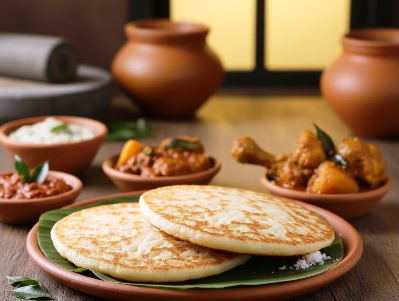
🍞Why Kallappam Is Special
🍚 Traditional fermented bread from Kerala, with roots in home kitchens and festive meals.
🌀 Fermentation gives a light texture and tangy flavor.
🌿 Cumin seeds, onions, and coconut add aroma and depth to the batter.
🍽️ Great as breakfast, tea-time snack, or with curries and stews.
🍚Ingredients
- 3 cups raw rice (Unakalari / Pachari rice)
- 1 cup grated coconut
- 3 tablespoons cooked rice
- 1–2 small onions, finely chopped
- 1 teaspoon cumin seeds
- 1–2 cloves garlic (optional)
- 1 teaspoon active dry yeast, dissolved in warm water with 1 teaspoon sugar
- Salt, to taste
- Water, as needed
👩🍳 Preparation (Without Toddy)
- Wash the raw rice thoroughly and soak it in water for 1–2 hours. Drain well.
- In a mixer or grinder, add the soaked rice, grated coconut, cooked rice, chopped onions, cumin seeds, garlic (if using), and salt.
- Grind everything together, adding water gradually, to form a smooth, thick batter. The batter should be thick but pourable.
- Transfer the batter to a clean bowl. Add the yeast mixture and mix gently until well combined.
- Cover the bowl and keep it in a warm place for 6–8 hours, or until the batter becomes light, airy, and slightly fermented.
- Once fermented, gently stir the batter. Adjust the consistency with a little water if needed.
🔥 How to Cook Kallappam
- Heat a flat pan (tawa) on low flame and lightly grease it with coconut oil or ghee.
- Pour 2–3 tablespoons of batter onto the pan and let it spread naturally.
- Cover and cook until the surface is set and the edges turn light golden.
- Flip gently, if needed, and cook briefly on the other side.
- Remove and serve hot.
Kallappam should be soft inside with a mild tang and gentle aroma.
🍽️ How to Serve
Kallappam tastes best when served with:
- Vegetable stew
- Kadala curry (black chickpea curry)
- Chicken or meat curry
- Coconut chutney
It can be enjoyed for breakfast, brunch, or as an evening snack.
🌿 Grandma’s Wisdom
In earlier times, fermentation happened naturally using fresh toddy. Food was seasonal, local, and prepared with what nature provided. Though ingredients have changed, the essence of the recipe remains the same—slow fermentation, simple ingredients, and gentle cooking.
Using yeast today is a practical and safe way to preserve this traditional dish while adapting to modern availability.
✨ Why You’ll Love Kallappam
A timeless recipe passed down through generations
Naturally fermented and easy to digest
Made with simple, wholesome ingredients
Soft, flavourful, and filling

 Grandma’s Holistic Wellness