
In our modern kitchens, we often keep tamarind in plastic covers or containers, but Grandma always had a specific way of “curing” and storing it to ensure it stayed fresh for years without losing its tang or health benefits. Proper storage prevents the tamarind from turning too dark or losing its natural oils.
The Traditional Benefit
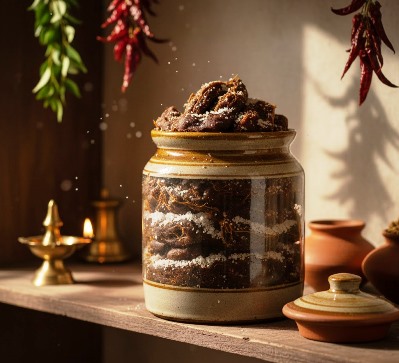
Storing tamarind with salt in a clay pot (Bharani) acts as a natural preservative. This traditional method prevents mold growth and keeps the tamarind soft and pliable, ensuring that the tartness (which aids digestion) remains balanced.
How to Follow This at Home
- Sun-Dry First: Before storing, spread the cleaned tamarind (seeds and fibers removed) on a tray and sun-dry it for 1–2 days.
- The Salt Layer: Take a clean, dry ceramic or glass jar. Place a layer of tamarind, sprinkle a little rock salt (Kallu Uppu), and press it down firmly. Repeat until the jar is full.
- Avoid Metal: Never store tamarind in metal containers, as the acid will react with the metal and spoil the taste and quality.
- Keep it Dark: Store the jar in a cool, dark corner of your pantry. The flavor actually deepens and improves as it ages.
Why it Works
Tamarind is highly acidic. The combination of sun-drying and rock salt creates an environment where bacteria cannot thrive. Using ceramic or glass ensures there is no chemical leaching, keeping your curries safe and healthy.
A Balanced Grandma Perspective
A well-stocked kitchen is a sign of a prepared home. By storing your ingredients the traditional way, you reduce waste and ensure that every meal you cook has the authentic, soul-warming taste of home.
The Wisdom of Eating with Your Hands

 Grandma’s Holistic Wellness