
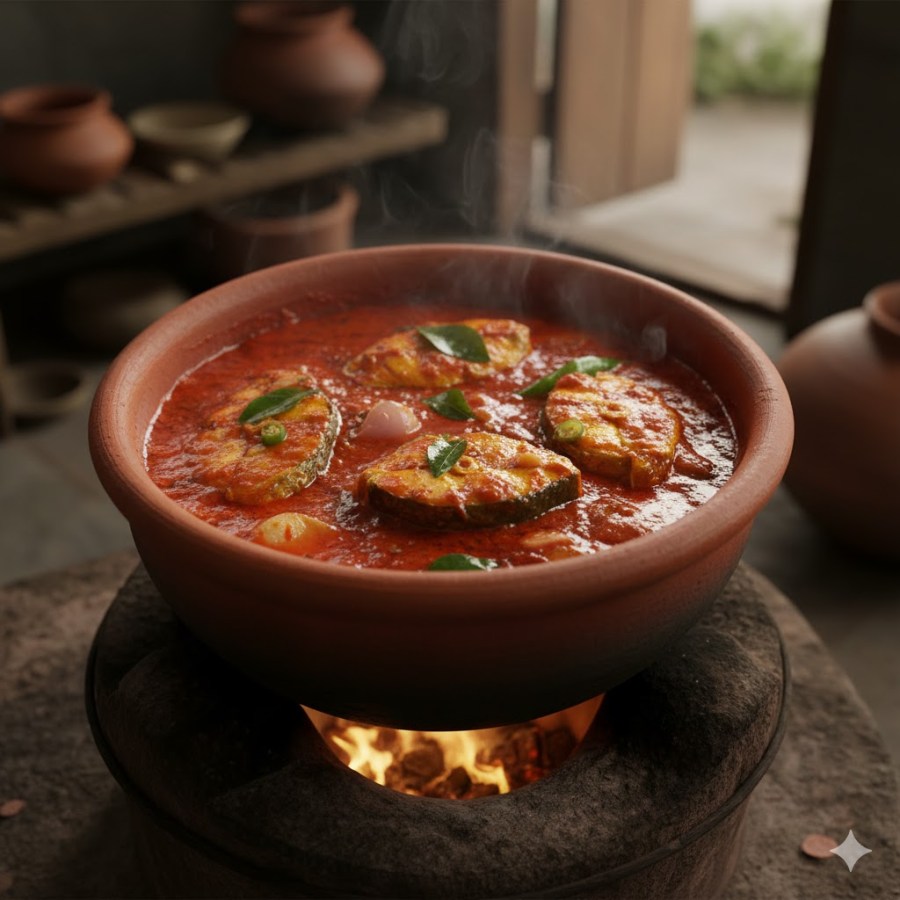
Meen Vatichathu is one of Kerala’s most iconic traditional fish curries, known for its deep red colour, bold spices, tangy flavour, and long keeping quality. This curry was prepared across Kerala for daily meals, weddings, and large gatherings, especially during times when refrigeration did not exist.
Made without coconut or onions, this curry relies on Kudampuli (Malabar tamarind) and spices to preserve it naturally. When reheated or gently boiled every day, the curry not only stayed good for several days — its flavour improved as time passed, with the gravy thickening and intensifying beautifully.
🐟 Why This Fish Curry Is Special
- 🌶️ Uses Kashmiri chilli powder for rich red colour without harsh heat
- 🍋 Kudampuli adds tanginess and acts as a natural preservative
- ❌ No coconut or onion — longer shelf life
- 🥘 Traditionally cooked in earthen pots (manchatti)
- 🍽️ Commonly prepared for weddings, feasts, and everyday meals
- ⏳ Tastes even better the next day — and the day after
🌿 Health Benefits
Besides being incredibly delicious, this curry is also wholesome:
- 🐟 Fish is rich in Omega-3 fatty acids, which help reduce cholesterol and support healthy skin and hair
- 🍋 Kudampuli aids digestion, metabolism, and weight management
- 🔥 Spices improve gut health and appetite
⏱️ Time & Servings
- Preparation Time: 15 minutes
- Cooking Time: 15 minutes
- Total Time: 30 minutes
- Serves: 4
🍛Ingredients
- 250 g seer fish (or any firm, meaty fish), cut into 1 cm thick pieces
- 2 tablespoons coconut oil
- 5–6 green chillies
- ½ teaspoon mustard seeds
- ½ teaspoon fenugreek seeds (methi)
- 5 garlic cloves
- 1 tablespoon Kashmiri chilli powder
- ½ teaspoon turmeric powder
- 2 sprigs curry leaves
- 4–5 pieces Kudampuli / Malabar tamarind (gambooge)
- 1 tablespoon ginger, crushed
- ½ teaspoon salt (adjust to taste)
- 2 cups water
👩🍳 Preparation Method
1. Prepare Kudampuli
Wash the kudampuli and soak it in ½ cup hot water. Keep aside.
2. Crush the Aromatics
Using a mortar and pestle, crush garlic, ginger, and green chillies separately.
(You may chop them if needed, but crushing gives better flavour.)
3. Start the Curry Base
Heat a deep pan — preferably a manchatti (earthen pot) — on medium flame.
Add coconut oil.
Once hot, add mustard seeds and fenugreek seeds. Let them splutter.
4. Add Aromatics & Spices
Add crushed garlic and ginger. Sauté for a minute.
Add crushed green chillies and curry leaves. Sauté briefly.
Add salt and turmeric powder. Mix well.
Now add Kashmiri chilli powder and sauté for about a minute until the raw smell disappears. Do not burn.
5. Add Kudampuli & Water
Pour in the soaked kudampuli along with the soaking water.
Add the remaining 1½ cups water and bring to a rolling boil.
6. Cook the Fish
Gently add the fish pieces.
Cover and cook on low flame for 15–20 minutes.
❗ Do not stir with a spoon — gently shake the pan if needed to avoid breaking the fish.
7. Finish & Rest
Once the gravy reaches your desired thickness, sprinkle fresh curry leaves.
Switch off the flame and let the curry rest for at least 10 minutes before serving.
🍽️ How to Serve
Meen Vatichathu pairs perfectly with:
- Steamed rice
- Kanji (rice gruel)
- Puttu
- Tapioca (kappa)
📝 Tips & Traditional Wisdom
- This curry can be kept for up to a week if reheated or gently boiled daily
- It tastes better each day as the gravy thickens and dries
- Kudampuli acts as a natural preservative, preventing spoilage
- Absence of coconut and onion helps extend shelf life
- Cooking in an earthen pot enhances flavour naturally
🌿 Grandma’s Kitchen Note
In old Kerala homes, this fish curry was cooked once and enjoyed over many days. As the gravy slowly reduced with daily heating, the flavour became deeper, richer, and more intense. The final thick coating on the fish was considered the most delicious part — a true example of slow food and culinary wisdom passed down through generations.

 Grandma’s Holistic Wellness