
In our grandmother’s kitchen, dosa was never just a breakfast dish. It was a quiet morning ritual filled with patience, care, and nourishment. The rhythmic sound of batter spreading on a hot tawa and the comforting aroma of dosa roasting slowly brought warmth to the entire home.
One of grandma’s most trusted secrets for making dosa that was soft inside and crisp outside was her use of a well-seasoned cast iron tawa, along with simple traditional techniques passed down through generations. Today, this wisdom feels more relevant than ever as many of us return to mindful, traditional cooking for better everyday wellness.
What Is Traditional Dosa & Why Is It Important?
Dosa is a fermented South Indian pancake made primarily from rice and urad dal. When prepared using traditional soaking and fermentation methods, dosa becomes light, easy to digest, and nourishing.
Fermentation naturally enhances nutrient availability and supports gut balance, making dosa a wholesome breakfast suitable for all age groups when eaten as part of a balanced diet.
Key Benefits of Traditional Dosa
- Light on digestion when properly fermented
- Naturally fermented batter supports gut health
- Provides steady energy for daily activities
- Suitable for children, adults, and elders
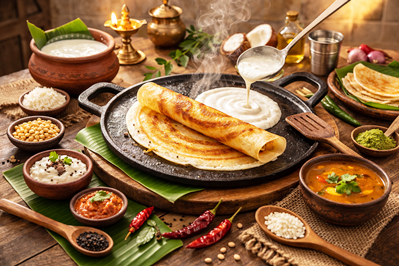
Why Cast Iron Cookware Was Always Preferred
In traditional homes, cooking vessels were chosen not just for convenience, but for their ability to support nourishment. Cast iron cookware was valued because it was durable, chemical-free, and long-lasting.
Grandma often said, “Good vessels make good food, and good food supports good health.”
Benefits of Cooking on Cast Iron
- Naturally adds small quantity of dietary iron
- Retains and distributes heat evenly
- Enhances flavor and texture
- Free from synthetic non-stick coatings
- Improves with regular use and seasoning
Unlike many modern pans, cast iron becomes better over time and can last for generations when cared for properly.
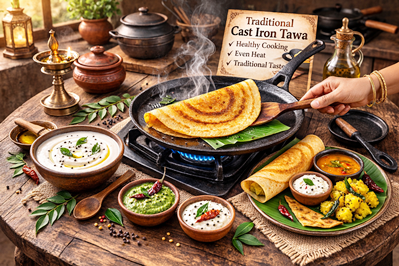
Traditional Healing Recipe: Soft & Crispy Dosa
Why This Recipe Supports Everyday Wellness
- Fermentation improves digestibility
- Simple ingredients reduce heaviness
- Gentle cooking preserves natural texture
- Balanced method suits regular consumption
Grandma’s Traditional Healthy Dosa Recipe
Ingredients
- Raw rice – 2 cups
- Urad dal – ¾ cup
- Cooked rice – 2–3 tablespoons
- Fenugreek seeds – 1 teaspoon
- Water – as needed
- Salt – to taste
Why Grandma Added Cooked Rice
Adding a small quantity of cooked rice during grinding was one of grandma’s quiet kitchen secrets. It helps improve softness inside the dosa, supports better fermentation, adds a gentle golden color, and enhances overall texture.
Method
- Wash and soak raw rice, urad dal, and fenugreek seeds for 6–8 hours.
- Grind into a smooth batter, adding cooked rice while grinding.
- Add water gradually to reach a smooth, pourable consistency.
- Allow the batter to ferment for 8–12 hours in room temperature, in cold places see that you place it in the room while heater is on. Too cold will prevent fermentation, like refrigerator, winter season etc. In hot climate fermentation becomes faster and you may not need 8-12 hours. If the fermentation happens fast and the batter rise up well, keep fridge and before preparing dosa keep outside for sometime until it reaches normal temperature.
- Add salt and mix gently before cooking.
Cooking Method on Cast Iron Tawa
- Heat the cast iron tawa slowly over medium flame.
- Sprinkle water and wipe gently with a cloth.
- Pour batter in the center and spread in a circular motion.
- Drizzle a few drops of oil around the edges.
- Cook until golden and crisp.
- Flip if needed and serve hot.
Recipe Details
- Prep Time: 15 minutes (excluding soaking)
- Cook Time: 20 minutes
- Total Time: Overnight fermentation
- Recipe Yield: 10–12 dosas
- Dish Type: Traditional South Indian Breakfast
Healthy Cooking Utensils for Better Nutrition
Traditional cooking tools support gentle heat, even cooking, and consistent results, helping preserve both taste and nutrition.
A heavy, well-seasoned cast iron dosa tawa helps achieve crispy edges, soft centers, and excellent heat control — just the way Grandma preferred.
👉 Recommended Cast Iron Tawa for Traditional Cooking:
For readers in India:
A thick, durable cast iron tawa that heats evenly, improves texture, and lasts for years.
👉 SOLARA Crownstone Premium Cast Iron Tawa for roti and dosa
For readers in the United States:
A pre-seasoned cast iron griddle ideal for dosa, pancakes, and traditional Indian cooking.
👉 Lodge Cast Iron Griddle (Pre-seasoned)
Serving Suggestions
Serve hot dosa with fresh coconut chutney, homemade sambar, traditional podi with gingelly oil, and a glass of buttermilk.
Frequently Asked Questions
Is dosa scientifically supported as a healthy food?
When fermented properly and eaten in moderation, dosa can be part of a balanced diet.
Does cast iron cooking improve nutrition?
Cast iron cookware may contribute small amounts of dietary iron and supports even cooking.
How often can dosa be eaten?
It can be enjoyed regularly as part of a varied, balanced diet.
Is this suitable for children and elders?
Yes, when prepared traditionally and served with light accompaniments.
Does this replace medical treatment?
No. This supports general wellness only.
Final Thoughts: Cooking Traditionally for Long-Term Wellness
Grandma believed that food prepared with patience and care nourishes more than just the body. By choosing traditional recipes and time-tested cookware, we reconnect with simple habits that support everyday wellbeing.
May your kitchen always be filled with warmth, simplicity, and mindful cooking.
Disclaimer
This article is for educational purposes only and does not replace professional medical advice. Always consult qualified professionals before making dietary or lifestyle changes.

 Grandma’s Holistic Wellness