
We’ve all felt it—that heavy, uncomfortable fullness after a good meal that makes you think about reaching for an antacid. But before you do, there’s a simple, traditional option worth trying: fennel seeds (saunf), brewed into a light, soothing tea.
Used for centuries across cultures, fennel isn’t just a mouth freshener—it has compounds that directly support digestion. Here’s what’s actually backed by evidence, and what you can realistically expect.
Why Fennel Works for Digestion
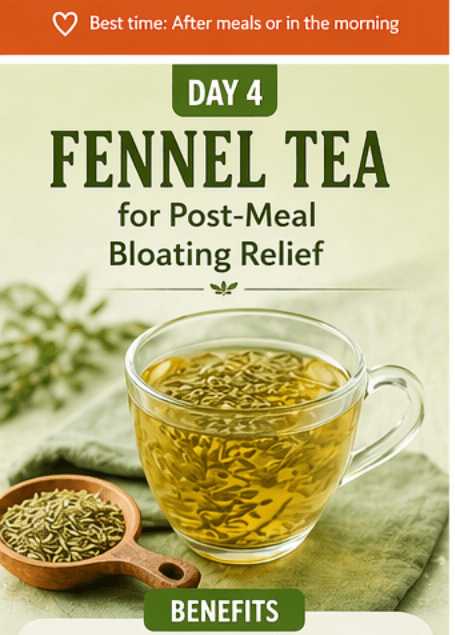
Fennel seeds contain natural plant compounds that act on the digestive system in measurable ways.
Anethole and digestive relaxation
Fennel’s main active compound, anethole, has been shown to have antispasmodic properties. This means it can help relax the smooth muscles of the gut, which may ease cramping and help gas move more comfortably through the digestive tract.
Carminative effect
Fennel is classified as a carminative herb—substances that help reduce gas formation or assist in expelling it. This is why it’s traditionally consumed after meals in many cultures.
Antioxidants and gut support
Fennel seeds contain antioxidants like flavonoids (including quercetin in small amounts). While they do contribute to overall health, their direct impact on gut lining protection in tea form is modest rather than dramatic.
Mild diuretic action
Fennel may have a gentle diuretic effect, which can help reduce temporary water retention. However, this effect is mild and shouldn’t be overstated.
What It Can Actually Help With
Reduces bloating and gas
This is where fennel tea is most reliable. Its muscle-relaxing and carminative properties can help relieve mild bloating and post-meal discomfort.
May ease mild indigestion
Some people find it helps with feelings of heaviness after eating, especially after large or rich meals.
Gentle and caffeine-free
Fennel tea is naturally caffeine-free and generally calming, making it suitable even in the evening.
What to Keep Realistic
It’s not a cure for chronic digestive disorders
If you have persistent bloating, IBS, or severe reflux, fennel tea can support comfort but won’t replace medical treatment.
Cooling effect is traditional, not clinical
In traditional systems, fennel is considered “cooling,” but this isn’t a scientifically defined effect. It may feel soothing, especially after spicy meals, but it doesn’t literally reduce body heat.
Blood sugar support is not strong evidence
While fennel contains nutrients like potassium and small amounts of vitamin C, there isn’t strong human evidence that fennel tea alone significantly impacts blood sugar levels.
How to Make Fennel Tea
Ingredients
- 1 cup water
- 1 teaspoon fennel seeds
Instructions
- Bring water to a boil
- Add fennel seeds (lightly crush for better extraction if you like)
- Simmer for 5 minutes
- Strain and drink warm
This creates a mild, slightly sweet herbal tea that’s easy to sip after meals.
When to Drink It
After meals is ideal, especially if you tend to feel bloated or heavy. It can also be taken at night since it contains no caffeine.
Is It Safe Daily ?
For most people, yes. Culinary amounts of fennel are considered safe. If you are pregnant, on medication, or have hormone-sensitive conditions, it’s best to check with a healthcare professional before regular use.
Final Thought
Fennel tea isn’t a miracle fix—but it’s one of those simple habits that can make a noticeable difference if post-meal discomfort is a regular issue. Instead of masking symptoms, it works gently with your digestive system, helping your body do what it’s already designed to do—just a little more comfortably.
Still Drinking Coffee? These 5 Teas Might Be a Better Choice
The Ancient Secret to Modern Bone Strength

 Grandma’s Holistic Wellness