
Ripe Kerala bananas should never be wasted, This soft and aromatic banana halva gently transforms steamed Nendran bananas (plantain) into a rich yet comforting dessert that children enjoy and elders trust. Cooked slowly with jaggery, coconut milk, and ghee, this halva reflects traditional kitchen wisdom where patience matters more than shortcuts and food is prepared with care.
Ingredients
- Big Kerala bananas (Nendran) – 10
- Melted jaggery – 4 tablespoons or to taste
- Rice flour – 3 tablespoons
- Coconut milk powder – 100 g (or 1–2 cups thick coconut milk)
- Ghee – 3 to 4 tablespoons
- Cardamom powder – 1 teaspoon
- Salt – ¼ teaspoon (just to balance sweetness)
- Cashew nuts – 50 g or as desired (optional)
How to Make Banana Halva
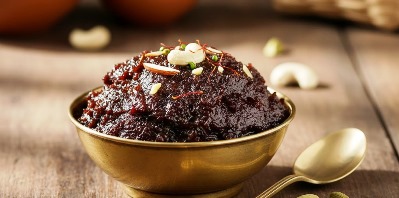
Melt the jaggery in ½ cup water on a low flame. Strain to remove impurities and keep aside to cool.
Steam the bananas in a steamer or idli maker for 10–15 minutes until soft. Allow them to cool, then peel and break into pieces.
In a bowl, mix rice flour and coconut milk powder with 1 cup water to make a thin, slightly watery paste.
If using thick coconut milk instead, dissolve the rice flour directly in the coconut milk.
Add the banana pieces to a mixer grinder along with the rice flour–coconut milk mixture and grind into a smooth paste. Transfer to a bowl, add melted jaggery and salt, and mix well. Adjust sweetness if needed.
Heat a deep non-stick pan on a low flame and add ghee. Pour in the banana mixture and stir well.
Cook slowly on low heat, stirring occasionally. If using a regular pan, stir more often to prevent sticking or burning. Keep the flame low throughout and allow the halva to cook patiently.
As the mixture thickens, add cardamom powder and mix well. After 20–30 minutes, the halva will start leaving the sides of the pan and ghee will begin to appear.
Roast the cashew nuts in a little ghee until golden and add to the halva. Mix well.
To check if it is done, take a small spoonful, cool slightly, and try rolling it into a ball. If it does not stick to your hand, the halva is ready.
Grease one or two plates with ghee. Transfer the halva, spread evenly, smoothen the top with a spoon, and apply a little ghee on top. Allow it to cool before cutting into pieces.
Traditional Notes from the Kitchen
Steaming bananas instead of frying keeps the halva soft and easy to digest. Jaggery provides warmth and depth, while ghee enhances aroma and richness. Cooking slowly on a low flame allows flavours to develop naturally, just as grandmothers always did.
Serving Suggestions
Serve banana halva at room temperature as an after-meal sweet or evening treat. Small portions are enough due to its richness. It pairs well with a cup of tea or light herbal coffee.
Important Tips from Grandma’s Kitchen
- Always use ripe Nendran bananas for best flavour and texture
- Keep the flame low from start to finish to avoid burning
- Stir patiently — halva needs time, not high heat
- A pinch of salt balances sweetness and enhances taste
- Use good-quality jaggery and fresh ghee for traditional aroma
Who Should Be Careful
- This banana halva is nourishing but rich
- People with diabetes should reduce jaggery and eat small portions
- Those with sedentary lifestyles should enjoy it occasionally
- Cashew nuts can be skipped for those with nut sensitivities
Nutritional and Health Benefits
- Kerala bananas provide natural energy and potassium
- Jaggery offers minerals and is gentler than refined sugar
- Coconut milk adds healthy fats that promote satiety
- Ghee supports digestion and nutrient absorption when used in moderation

 Grandma’s Holistic Wellness