
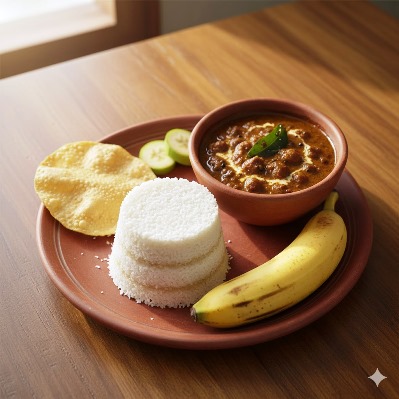
Puttu (Kerala Tube Bread): A Traditional Healthy Breakfast
Puttu, also known as Kerala Tube Bread, is a classic traditional breakfast that has nourished generations. It was especially popular among those who preferred a non-fermented, light, and easily digestible meal.
Made primarily from rice flour and fresh coconut, puttu is considered one of the healthiest traditional breakfasts. Its simple preparation, natural ingredients, and steaming method make it gentle on digestion and suitable for all ages.
Why Puttu Is Considered a Healthy Food
Traditional wisdom and modern nutrition agree on the benefits of puttu:
- Steamed, not fried – no excess oil
- Easy to digest
- Naturally gluten-free
- Provides sustained energy
- Rich in fibre (especially when made with brown rice or matta rice)
- Cooling and suitable for tropical climates
In the past, rice flour was carefully prepared at home, ensuring purity and nutrition. Today, good-quality puttu flour is easily available, though homemade flour remains the best option when possible.
Ingredients
- 1 cup roasted rice flour (puttu flour / brown rice flour)
- 1 cup freshly grated coconut
- Salt, to taste
- ¾ cup water (adjust as needed)
Preparation Method
Step 1: Prepare the Flour
In a bowl, mix rice flour and salt.
Sprinkle water gradually while mixing with fingers until the mixture resembles moist breadcrumbs.
👉 The flour should not be sticky or dough-like.
Step 2: Add Coconut
Mix 2 tablespoons of grated coconut into the flour and combine lightly.
Step 3: Prepare the Steamer
In a pressure cooker or traditional Puttu Kudam, add water and bring it to a boil.
Step 4: Layer the Puttu
- Insert the perforated disc (chillu) into the bottom of the puttu tube
- Add:
- 1 tablespoon grated coconut
- 3 tablespoons prepared flour
- Repeat layers until the tube is full
- Do not press tightly
- Finish with grated coconut on top
- Cover with lid
Step 5: Steam
Place the filled tube on the cooker or puttu kudam and steam.
When steam starts coming through the holes on the lid and a pleasant aroma fills the kitchen, the puttu is ready.
If steam does not come out within 10 minutes, gently insert a thin stick through the holes to allow even steaming.
Steam for another 10–15 minutes, ensuring there is sufficient water in the cooker.
Step 6: Serve
Remove from heat, open the lid, and gently push from the bottom to release the puttu in a cylindrical shape.
Serve hot.
Traditional Serving Suggestions
Puttu is commonly served with:
- Ripe banana (especially boiled Nendran banana or small banana)
- Papad
- Cooked green gram (cherupayar)
- Kadala curry (black chickpea curry)
It also pairs well with:
- Vegetable curry
- Fish curry
- Meat curry (optional)
If You Don’t Have a Puttu Maker
You can prepare puttu using:
- A pressure cooker (without whistle)
- A coconut shell or steel container
Fill the shell with flour and coconut layers, cover with a heavy lid, and steam.
* Ensure the lid is secure to prevent displacement due to steam pressure.
Grandma’s Kitchen Wisdom
In earlier days, puttu was cooked:
- On firewood stoves
- Using bamboo or coconut-shell puttu makers
- With utensils made from coconut shells and arecanut wood
Rice was traditionally:
- Sun-dried after threshing
- Pound-ground using wooden or stone mortars
- Made from unboiled raw rice (Unakalari)
This method preserved nutrients and made puttu far more wholesome than modern refined rice products.
A Simple Dish with Deep Roots
Puttu is not just food—it is a reflection of:
- Sustainable living
- Natural cooking methods
- Zero-waste kitchens
- Nutritional wisdom passed through generations
Simple, nourishing, and timeless—puttu remains a perfect example of traditional healthy living.

 Grandma’s Holistic Wellness