
When we think about fat, we usually think about what we can pinch under our skin. But there’s another kind—visceral fat—that sits deep inside your belly, wrapped around important organs like your liver and intestines.
You can’t see it, but it matters more for your health.
Too much visceral fat is linked with higher chances of conditions like heart disease, type 2 diabetes, and other metabolic problems. And here’s something surprising: even people who look slim can carry unhealthy levels of this hidden fat.
How to Gently Reduce Visceral Fat ?
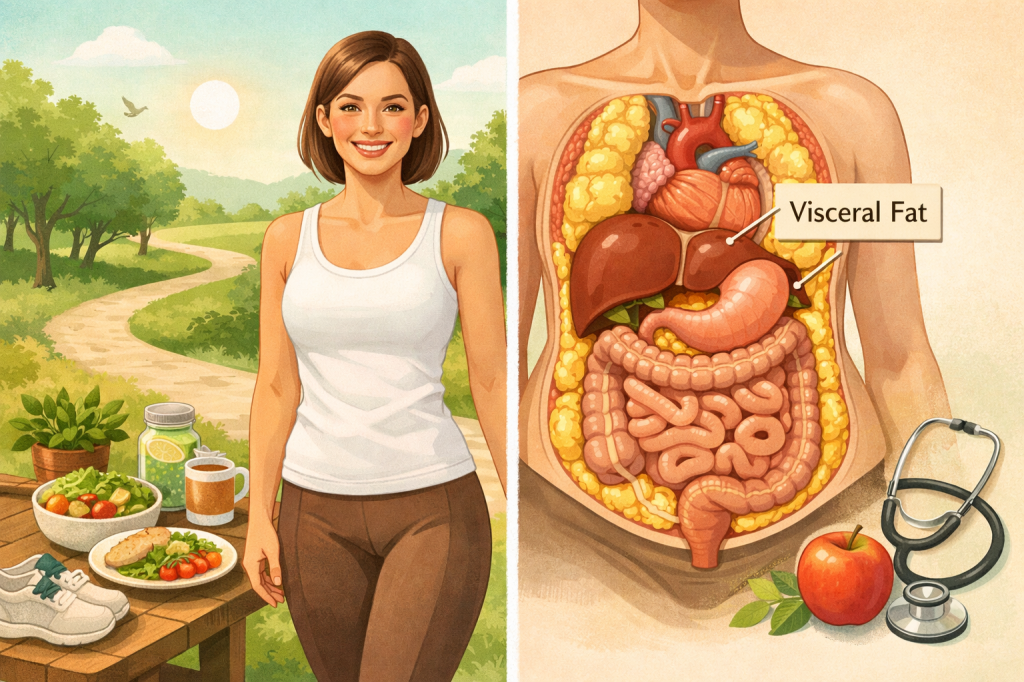
No extreme diets. No punishing workouts. Just steady, sensible habits that your body understands.
1. Eat Real, Nourishing Food
Focus on simple, home-style meals:
- Good sources of protein (like eggs, lentils, fish, or dairy)
- Plenty of vegetables
- Whole foods instead of packaged ones
These help you stay full and keep your blood sugar steady.
2. Cut Back on Sugary Drinks
Soft drinks, packaged juices, and too much added sugar are strongly linked to belly fat over time.
A good rule? Drink more water, buttermilk, or fresh homemade drinks instead.
3. Keep Your Body Moving Daily
You don’t need fancy workouts.
- Walking after meals
- Light strength exercises
- Occasional brisk activity
All of these help reduce deep belly fat. The key is doing it regularly—not perfectly.
4. Take Care of Your Mind
When life feels stressful, the body can hold onto more fat around the belly.
Simple habits help:
- Sitting quietly for a few minutes
- Spending time in nature
- Talking with loved ones
Small things, done daily, make a real difference.
5. Don’t Compromise on Sleep
Sleeping well is one of the most underrated health habits.
Getting around 7–9 hours of sleep helps your body regulate hormones and manage fat more effectively.
A Gentle Reminder
There’s no quick fix for visceral fat—and that’s okay.
Your body responds best to consistent, caring habits. Eat simply, move often, rest well, and give it time.
That’s the kind of wisdom that lasts.
Frequently Asked Questions
What is the difference between visceral fat and regular fat?
Regular fat (the kind under your skin) is called subcutaneous fat. Visceral fat is stored deeper inside the abdomen, around your organs. This deeper fat is more strongly linked to health problems when it builds up in excess.
Can I have visceral fat even if I look slim?
Yes. Some people may look thin on the outside but still carry excess visceral fat internally. This is why overall lifestyle habits matter more than appearance alone.
How do I know if I have too much visceral fat?
You can’t directly see visceral fat, but a growing waistline can be a clue. Doctors may use measurements like waist circumference or scans for a more accurate assessment.
What foods help reduce visceral fat?
There’s no single “magic” food, but a pattern helps:
- Whole, home-cooked meals
- Adequate protein (like lentils, eggs, fish)
- Plenty of vegetables and fiber
Reducing added sugars and highly processed foods is especially important.
Are sugary drinks really that harmful?
Yes. Regular consumption of sugary drinks is strongly linked to weight gain and increased belly fat over time. Replacing them with water or traditional homemade drinks can make a meaningful difference.
What kind of exercise is best?
Both walking and strength-building activities are helpful. You don’t need intense workouts—regular movement, done consistently, is what supports long-term fat reduction.
Does stress really affect belly fat?
Yes. Long-term stress can influence hormones in a way that encourages fat storage around the abdomen. Managing stress through simple daily habits can support overall health.
How does sleep affect visceral fat?
Poor sleep is linked to weight gain and higher visceral fat levels. Getting around 7–9 hours of good-quality sleep helps your body regulate metabolism and appetite.
How long does it take to reduce visceral fat?
It takes time and consistency. Small, steady lifestyle changes over weeks and months are far more effective than quick fixes.
Is there a quick way to get rid of visceral fat?
No safe or lasting method works overnight. The most reliable approach is a combination of balanced eating, regular movement, good sleep, and stress management.
Final Thoughts
You don’t have to “look overweight” to have health risks—and that’s what makes visceral fat easy to overlook. The good news? Your body responds quickly to small, consistent changes. Simple habits like daily movement, home-cooked meals, better sleep, and stress reduction can make a real difference over time.
Focus on progress, not perfection. When you support your body with a calm, balanced lifestyle, you’re not just reducing hidden fat—you’re building long-term health from the inside out.

 Grandma’s Holistic Wellness