The practice of self-massage, traditionally known as Abhyanga, is a quiet ritual of self-care that involves applying warm oil to the body. It is a moment of stillness in a busy world, designed to calm the nervous system and nourish the skin before your morning or evening bath.
Why This Matters for Daily Life
In our fast-paced routines, our bodies often hold onto physical and mental tension without us realizing it. Taking a few minutes to massage the skin helps move the lymph, eases tired muscles, and creates a sense of being “grounded” and prepared for the day ahead.
Traditional Understanding
In traditional homes, elders viewed the daily application of oil as a way to keep the body supple and the joints strong. It was believed that just as a wooden wheel needs oiling to prevent it from becoming brittle, the human body needs regular lubrication to age gracefully and remain flexible.
Modern Lifestyle Connection
Today, we spend a lot of time in artificial environments with air conditioning or heating, which can leave our skin dry and our minds over-stimulated. Reintroducing oil massage provides a simple, tactile way to reconnect with our physical selves and soothe a restless mind after a long day of screen time.
Simple Habits You Can Follow
- Warm the Oil: Place your bottle of sesame or coconut oil in a bowl of warm water for a few minutes before use.
- Start at the Extremities: Use long strokes on your limbs and circular motions over your joints and stomach.
- Don’t Forget the Feet: Massaging the soles of your feet before bed can significantly improve the quality of your sleep.
- The Scalp Connection: A gentle head massage once a week can help release deep-seated tension in the jaw and forehead.
- Wait Before Washing: Let the oil sit on your skin for 5–10 minutes to allow for full absorption before stepping into the shower.
Frequently Asked Questions
H3: Which oil is best for my skin?
Generally, organic sesame oil is preferred for its warming qualities, while coconut oil is a wonderful cooling choice for the warmer summer months.
H3: Do I need to do this every single day?
While tradition suggests daily practice, even doing it twice a week—perhaps on a relaxed weekend morning—provides significant benefits for your skin and mood.
H3: Can I leave the oil on all day?
It is best to wash it off after about 15 minutes. The massage helps the skin absorb what it needs, and the subsequent warm bath helps clear away any toxins released during the process.
A Balanced Grandma Perspective
There is no need to make this a complicated chore. If you don’t have time for a full-body massage every day, even just five minutes spent on your hands and feet will make a difference. It is the consistency of the habit, rather than the length of time, that brings the most peace to the home and the body.
Internal Links
The Wisdom of the Stone Mortar – A Simple Traditional or Homestyle Healthy Meal
Grandma’s Traditional Garlic Magic
Traditional Tools for Modern Relief
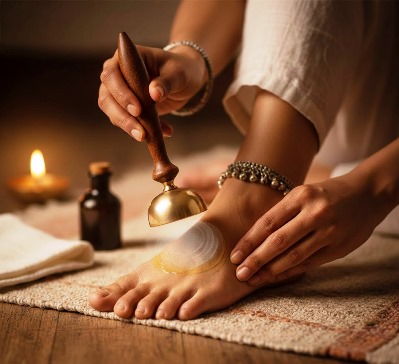
In our traditional homes, we didn’t just use our hands; we used “healing metals.” The Kansa Wand, made of a sacred blend of copper and tin, has been used for over 5,000 years to pull out “Ushna” (excess heat) from the body.
- Want to Buy in USA? [Click here for the Homeda Kansa Wand]
- Want to Buy in India? [Click here for the Traditional Bronze Massager]
Why the Metal Turns Grey When you use this wand on your foot pads with a little oil or ghee, you might see the oil turn a dark grey. Do not worry! This is the metal reacting with the acidity and toxins in your body. It is a sign that the “Amrut” (healing) is working to balance your system.
I may earn a tiny amount with no extra cost on you.

 Grandma’s Holistic Wellness