
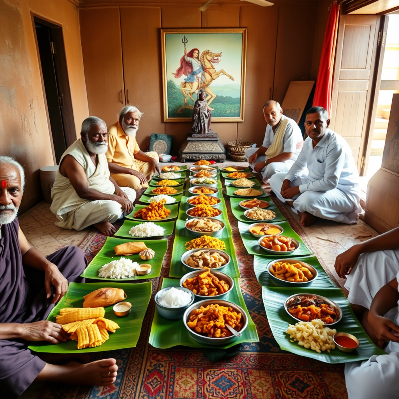
There is a treasured tradition from my parental home that I have not been able to continue—a ritual deeply rooted in faith, gratitude, and ancestral belief. Every year, my parents used to organize a special sadya (feast) in honor of St. George, the saint known for slaying the dragon that terrorized a village in ancient times. In our tradition, this act of St. George was believed to offer protection—especially from snakes, which were seen as a threat in the region. By honoring him with this feast, we believed he would keep snakes away from our home and surroundings.
The custom involved inviting twelve old men or twelve young boys to our home—representing the twelve disciples of Jesus. The rule was simple but sacred: a minimum of twelve different dishes had to be served on the banana leaf for each of the twelve guests. And it wasn’t just about quantity—it was about hospitality, generosity, and love. The meal included at least three types of meat dishes, one fish curry, appam, pidi (a rice flour delicacy usually eaten with chicken curry), rice, payasam, banana, pappadam, and a variety of side dishes and curries. The guests were to eat until their stomachs were completely full—a sign that the offering was complete and accepted.
This tradition was an annual event in my childhood, and it created a sense of reverence and festivity in our home. Sadly, I have not kept it after my marriage, as I moved into another family. This was an ancestral tradition specific to my parental home, and though I haven’t been able to carry it forward, I hold it in my heart with deep respect and affection.

 Grandma’s Holistic Wellness