
Pesaha Appam is a sacred unleavened bread prepared by Syro-Malabar Christian families in Kerala on Maundy Thursday, commemorating the Passover and the Last Supper of Jesus Christ. This simple, wholesome bread is made without yeast and shared with family, neighbour’s, and friends as part of the Pesaha celebration.
Why This Uzhunnappam (Unleavened Bread)
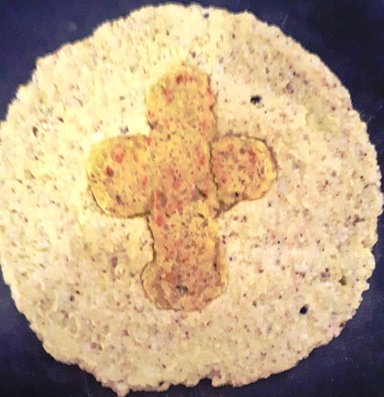
A traditional unleavened bread prepared for Pesaha (Maundy Thursday), made without fermentation and cooked on a low flame. This simple dish symbolizes remembrance, sharing, and faith, and is traditionally eaten with Pesaha Pal.
Ingredients
- Moong Dal (Green gram) – ½ cup
- Rice Flour (Appam flour, roasted) – 1 cup
- Fresh Grated Coconut – 1 cup
- Cumin Seeds – 1 teaspoon
- Garlic – 10 cloves
- Small Onions – 5
- Black/White Pepper – ½ teaspoon
- Turmeric Powder – ½ teaspoon
- Salt – to taste
- Water – as required
- Oil or Ghee – for cooking
Preparation
Wash the moong dal thoroughly and dry roast it on low flame until it turns golden brown. Allow it to cool, then grind it coarsely (no need to make a fine powder).
In a large mixing bowl, combine the powdered moong dal with the roasted rice flour.
Grind cumin seeds, black pepper, garlic, and small onions into a coarse paste and add it to the flour mixture.
Add grated coconut, turmeric powder, and salt. Mix everything well.
Gradually add water and mix to form a very thick batter, similar to a thick cake batter. Do not add too much water—the batter should be heavy and firm.
Cooking Method (Pan Method)
Heat a frying pan on low flame and lightly grease it with oil or ghee.
Pour 1–2 ladles of batter onto the pan and gently spread it into a thick circle using the back of a spoon.
Cover with a lid and cook on low heat until the bottom is cooked.
Carefully flip and cook the other side until done. Take care not to burn.
Repeat with the remaining batter.
Notes & Variations
- In some regions of Kerala, Pesaha Appam is steamed instead of pan-cooked. When steaming, turmeric powder is traditionally omitted.
- Traditionally, raw rice flour (used for puttu) is used. When mills are unavailable, soaked raw rice is ground like idli or dosa batter and used instead.
- One large Pesaha Appam is usually prepared with a Cross marked in the center, traditionally made using palm leaves received on Palm Sunday.
Serving Tradition
Pesaha Appam is eaten after dinner on Maundy Thursday along with Pesaha Pal (a special sweet coconut milk). The head of the family cuts the bread and distributes it among family members, symbolizing unity, humility, and remembrance.
Extra Pesaha Appam is shared generously with neighbours and friends.
A Reflection
This recipe is shared in remembrance of those who could not celebrate Pesaha, and in gratitude to doctors, nurses, health workers, police, volunteers, and all who serve selflessly—living the true message of the Last Supper: “As I washed your feet, wash one another’s feet.”
Eat simple food, stay healthy, stay safe.
Wishing you a blessed and peaceful Maundy Thursday.

 Grandma’s Holistic Wellness