
In grandma’s kitchen, the food was never bland, yet she rarely reached for the salt shaker. She knew that the true secret to a flavorful meal lay in the garden and the spice box. By using nature’s aromatics, she kept the family’s blood pressure steady and the flavors bright.
Why This Matters for Daily Life
Reducing salt intake is one of the gentlest ways to care for your heart’s rhythm. When we rely on herbs and spices instead, we reduce the fluid strain on our arteries, allowing our hearts to pump with much greater ease.
Traditional Understanding
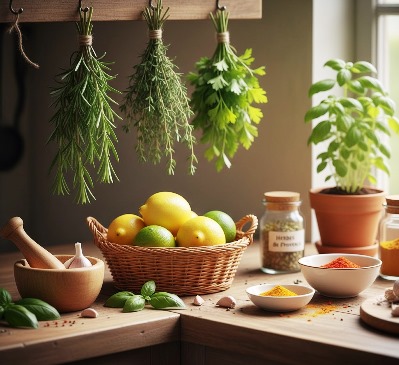
Our elders knew that herbs were more than just garnish; they were the soul of the dish. A kitchen was rarely without a bunch of drying herbs or a bowl of lemons, used to “wake up” the food naturally.
Don’t throw away the salt shaker—just move it to the back of the cupboard. Try seasoning your next meal with double the herbs and half the salt you usually use. Your taste buds will adjust in just a few days!
Modern Lifestyle Connection
Today, many of us rely on packaged seasonings that are hidden salt traps. Reclaiming the art of using fresh and dried herbs allows us to control exactly what goes into our bodies while bringing a fresh, modern zest to our everyday cooking.
Simple Habits You Can Follow
- The Power of Citrus: A squeeze of fresh lemon or lime at the very end of cooking “wakes up” the flavors in a way that mimics salt.
- Aromatic Garlic & Onions: Slowly sautéing garlic, onions, or shallots creates a deep, savory base (umami) that makes you forget you used less salt.
- Dry Toast Your Spices: Briefly warming cumin, coriander, or black pepper in a dry pan before adding them to your dish releases oils that provide a much punchier flavor.
- Fresh Herb Finishing: Use soft herbs like parsley, cilantro, or mint as a topping. The fresh “green” hit provides a satisfying contrast to savory dishes.
- Vinegar Zest: A splash of apple cider vinegar or balsamic can provide the “tang” that many people mistake for a need for more salt.
Internal Links
Frequently Asked Questions
Which herbs are best for heart health?
Fresh parsley and black pepper are wonderful “all-rounders” that complement almost any traditional or homestyle meal.
Does dried herb flavor last forever?
No, it’s best to refresh your dried herb jars every six months to ensure you are getting the full flavor and benefits.
Is sea salt better than table salt? Is it okay to use salt substitutes?
While it may have more minerals, the effect on the heart is similar, so it is still best to let the herbs provide the main flavor.
It is usually better to stick to natural herbs and spices. Some substitutes contain potassium which may not be suitable for everyone; always check with a professional if you are unsure.
A Balanced Grandma Perspective
Bringing flavor back to the basics is a traditional way to enjoy your food while honoring your body’s needs. A happy heart starts with a flavorful, low-strain kitchen.

 Grandma’s Holistic Wellness