
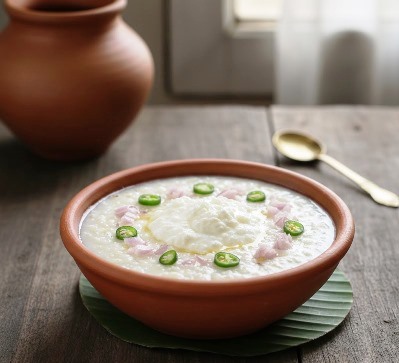
Pazhamkanji, also known as fermented rice, is one of Kerala’s oldest and most nourishing traditional breakfasts. Long before probiotics became a health trend, our grandparents relied on this simple fermented food to stay energetic, cool, and strong throughout the day.
Made from leftover cooked rice soaked overnight in water, pazhamkanji is a naturally fermented food that supports digestion, improves nutrient absorption, and provides sustained energy—especially in hot, humid climates.
This humble dish reflects the wisdom of traditional food practices: no waste, minimal ingredients, and maximum nutrition.
Why Pazhamkanji Was a Staple in Traditional Homes
In earlier times, pazhamkanji was commonly eaten by farmers, laborers, and homemakers before long hours of physical work. It was filling, easy to digest, and gentle on the stomach.
Grandmothers knew—without scientific terms—that fermented rice:
- Keeps the body cool
- Prevents fatigue
- Improves digestion
- Sustains energy for long hours
Today, science confirms what tradition always practiced.
Health Benefits of Pazhamkanji
🌿 1. Natural Probiotic
Overnight fermentation encourages the growth of beneficial bacteria (Lactobacillus), which:
- Improve gut health
- Aid digestion
- Support immunity
🌿 2. Better Nutrient Absorption
Fermentation increases the bioavailability of:
- Iron
- Calcium
- Potassium
- B-vitamins (especially B6 and B12)
🌿 3. Cooling Food
Pazhamkanji helps regulate body heat, making it ideal for tropical climates and summer months.
🌿 4. Easily Digestible
Because fermentation breaks down starches, fermented rice is gentler on the stomach than freshly cooked rice.
🌿 5. Sustained Energy
It provides slow-release carbohydrates that keep you full and energized without heaviness.
Traditional Pazhamkanji Recipe
🥣 Ingredients
- 1 cup cooked rice (preferably Kerala matta rice or brown rice)
- Enough drinking water to cover the rice
- Salt to taste
- 1–2 small shallots (crushed, optional)
- 1 green chilli (crushed, optional)
👩🍳 Method
- Cook rice as usual and allow it to cool completely.
- Transfer the cooled rice to a clean clay pot or steel vessel.
- Add enough water to fully submerge the rice.
- Cover loosely and leave at room temperature overnight (8–12 hours).
- By morning, the rice will be lightly fermented.
- Mash the rice gently with the soaking water.
- Add salt and crushed shallots or green chilli if desired.
- Mix well and serve fresh.
How to Eat Pazhamkanji (Traditional Pairings)
Traditionally, pazhamkanji is enjoyed with:
- Fresh curd or buttermilk
- Homemade pickle or salted mango
- Green chillies or shallots
- Steamed vegetables or tapioca
Keep the accompaniments simple—the power of pazhamkanji lies in its simplicity.
Important Tips from Grandma’s Kitchen
✔ Always use clean utensils and potable water
✔ Ferment only overnight—do not over-ferment
✔ Best consumed fresh in the morning
✔ Clay pots enhance taste but steel vessels are fine
Who Should Be Careful
- While pazhamkanji is healthy, moderation is important:
- Diabetics or people with blood sugar issues should consume small portions
- People with acidity or sensitive stomachs should avoid chillies
As it is carbohydrate-rich, it is best paired with physical activity
A Simple Food with Timeless Wisdom
Pazhamkanji reminds us that good health does not always come from expensive superfoods. Sometimes, it comes from respecting tradition, reducing food waste, and eating in harmony with nature.
This is not just a recipe—it is a lesson passed down through generations.
👉 Learn the The Health Wisdom Behind Fermented Rice Or Pazhamkanji

 Grandma’s Holistic Wellness