
Fermented rice or Pazhamkanji was a quiet part of traditional kitchens for generations. Long before nutrition labels and health trends, this simple preparation was trusted for its ability to nourish the body, improve digestion, and sustain energy through the day. What modern science is now explaining, tradition has always practiced.
What Is Fermented Rice or Pazhamkanji?
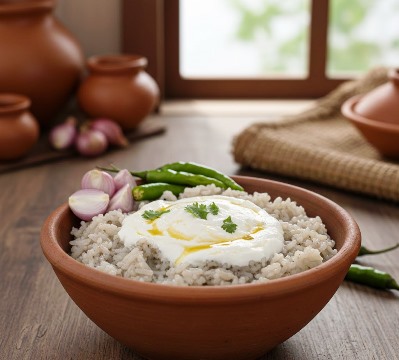
Fermented rice is prepared by soaking cooked rice in water overnight and allowing it to naturally ferment. By morning, the rice becomes fermented, soft, and enriched with beneficial bacteria.
Kanji, often made from rice water or diluted cooked rice, is a light, easily digestible food commonly consumed for breakfast or during recovery from illness.
Both are examples of natural fermentation, requiring no starters or additives—just time and simplicity.
Why Fermentation Matters?
Fermentation changes the nature of food in gentle but powerful ways.
• Improves digestion by breaking down complex starches
• Encourages healthy gut bacteria
• Enhances nutrient absorption
• Makes food lighter on the stomach
Fermented rice is especially beneficial in warm climates, where the body needs cooling, hydration, and easy digestion.
Gut Health and Natural Probiotics
Fermented rice is rich in natural probiotics that support gut health. A healthy gut plays a key role in:
• Better digestion
• Stronger immunity
• Reduced bloating and acidity
• Improved nutrient uptake
Unlike packaged probiotic drinks, fermented rice is free from preservatives and sugars, making it gentle and effective for daily consumption.
A Cooling and Restorative Food
In traditional practice, fermented rice and kanji are often consumed:
• During hot seasons
• After heavy or festive meals
• When recovering from fever or weakness
• As a light morning meal
They cool the body, rehydrate naturally, and restore balance without strain.
Nutritional Simplicity
Fermented rice may look plain, but it carries quiet strength.
• Provides sustained energy
• Supports bowel regularity
• Contains B vitamins produced during fermentation
• Helps reduce food waste by reusing leftover rice
This simplicity is what makes it powerful—not excess, but balance.
How It Was Traditionally Consumed
In many homes, fermented rice was eaten with:
• A pinch of salt
• Green chillies or shallots
• Buttermilk
• Pickles or chutney
Kanji was often paired with light sides like vegetables or pulses, making it a complete yet gentle meal.
Why This Tradition Still Matters Today
Modern diets are often heavy, processed, and rushed. Fermented rice and kanji remind us that:
• Food does not need to be complicated to be nourishing
• Digestion is as important as nutrition
• Traditional wisdom supports long-term health
Reintroducing these foods into everyday life is not about going backward—it is about returning to balance.
A Quiet Lesson from the Past
Fermented rice and kanji teach us an important lesson:
Good health begins with simple habits practiced consistently.
In preserving these traditions, we are not just saving recipes—we are protecting knowledge that cares for the body gently and naturally.

 Grandma’s Holistic Wellness