
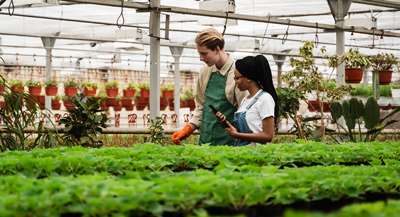
In the year 2040, the life of a farmer has undergone a profound transformation, marked by the widespread integration of artificial intelligence (AI) and modern technology into every facet of agricultural practices. The bucolic scenes of manual labor and traditional farming methods have given way to a highly digitized and automated landscape, where the synergy of human expertise and technological prowess defines the agricultural domain.
Farmers now operate in a realm of high-tech farming equipment, where autonomous tractors, drones, and smart devices handle tasks ranging from planting to harvesting with unprecedented precision. These advancements have ushered in a new era of efficiency, optimizing resource utilization and significantly boosting overall productivity. The agricultural landscape is no longer bound by the limitations of manual labor; instead, it thrives on the capabilities of sophisticated machinery driven by artificial intelligence.
Data has become the lifeblood of modern farming, with farmers relying extensively on analytics and AI algorithms to make informed decisions. Weather patterns, soil conditions, and market trends are scrutinized with meticulous detail, empowering farmers to maximize crop yields and minimize resource inputs. The farm itself has become a connected ecosystem, with sensors and cameras linked to the Internet of Things providing real-time insights into crop health, irrigation needs, and potential pest threats.
Specialization in technology has become a requisite for farmers, necessitating a shift in skill sets towards managing and troubleshooting advanced agricultural machinery, AI systems, and data analytics tools. Education in technology-related fields has become a cornerstone for success in this transformed agricultural landscape.
As traditional manual labor tasks are increasingly automated, farmers find themselves liberated to focus on strategic and creative aspects of farming. Crop rotation planning, sustainable farming practices, and the exploration of innovative approaches take precedence, allowing farmers to exercise their expertise in more cerebral aspects of their profession.
Precision farming, enabled by AI and technology, has become the norm. Farmers optimize the use of resources such as water, fertilizers, and pesticides, embracing sustainability as a core principle. The shift towards environmentally conscious practices is a response to the growing awareness of the need to minimize the ecological footprint of agriculture.
Market access has expanded beyond local boundaries, as farmers leverage digital platforms and AI predictions to navigate global markets. The ability to anticipate market demands empowers farmers to make informed decisions on crop selection, contributing to the economic viability of their operations.
However, the integration of AI and technology in farming is not without challenges. Job displacement, data privacy concerns, and the ethical implications of widespread technological adoption demand careful consideration and responsible governance. As farming communities navigate these challenges, a sense of collaboration and community emerges. Farmers form networks to share insights, data, and best practices, transcending local borders and creating a global community united by common goals and challenges.
Continuous adaptation and learning have become imperatives for farmers in this rapidly evolving landscape. The intersection of traditional agricultural wisdom with cutting-edge technology defines the success of farmers in 2040. Lifelong learning is not just a personal choice but a professional necessity, ensuring that farmers remain at the forefront of innovation and sustainability in the ever-changing world of AI-driven agriculture. In this new era, the farmer is not just a steward of the land but a technologically adept custodian of the future of food production.
#TechFarm2040 #AgriInnovation #DigitalAgRevolution #SustainableFarmingAI #GlobalFarmNetwork

 Grandma’s Holistic Wellness