
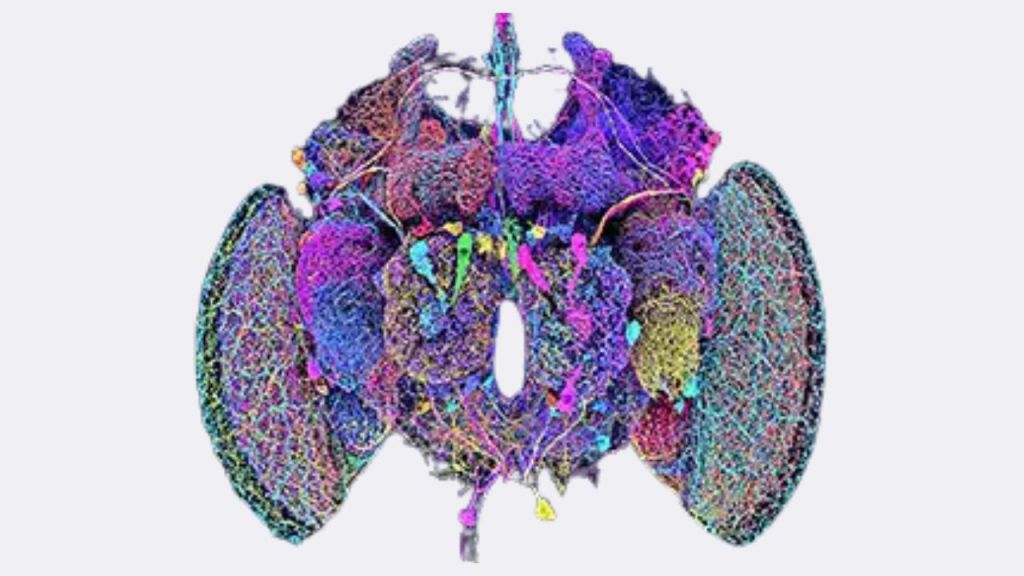
In a groundbreaking achievement for neuroscience, researchers have unveiled the first complete wiring diagram, or “connectome,” of every neuron in an adult fruit fly brain. This intricate map details 139,255 neurons and their 50 million connections, providing an invaluable resource for understanding the fundamental principles of brain structure and function. This monumental project was led by the FlyWire Consortium, an international collaboration involving experts from prestigious institutions, including the MRC Laboratory of Molecular Biology and Princeton University.
A New Era in Brain Research
Mapping the entire neural circuitry of the fruit fly (Drosophila melanogaster) is a critical step toward deciphering how brains operate across species, including humans. Although fruit flies have only 140,000 neurons compared to the approximately 86 billion in human brains, their simpler neural architecture allows for easier manipulation and study of genetic and behavioral impacts.
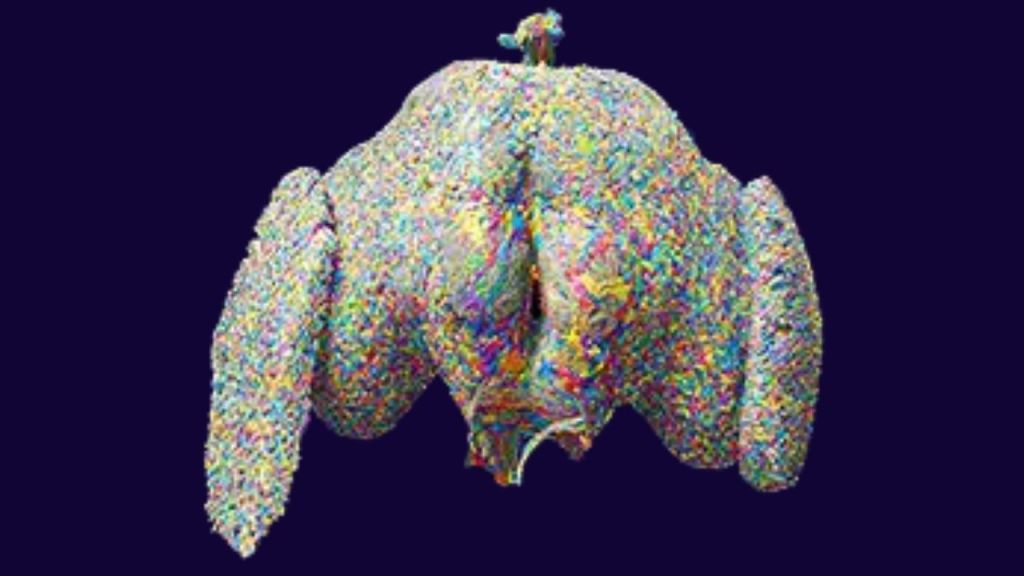
The researchers achieved this monumental task by slicing the tiny fruit fly brain—measuring less than a millimeter—into 7,000 ultra-thin sections. These slices were meticulously scanned using high-resolution electron microscopy, allowing scientists to extract detailed information about each neuron and its connections. The vast amount of data was analyzed with the help of advanced machine learning techniques, illustrating the increasing role of artificial intelligence in modern neuroscience.
Implications for Neuroscience
The completed wiring diagram does more than just catalog neural connections; it serves as a vital reference point for future studies. One striking revelation from the research is the substantial similarities in wiring patterns compared to earlier, smaller-scale mappings, suggesting that core principles of neural organization may be conserved across different individuals and species.
Moreover, the researchers classified over 8,000 cell types within the fly brain and predicted whether synapses were excitatory or inhibitory. This foundational work not only enhances our understanding of how the fruit fly processes information but also paves the way for simulating its neural responses to various stimuli, deepening insights into neural behavior.
Future Research Directions
While this achievement marks a significant milestone, the journey of exploration is far from over. Future studies aim to investigate differences in neuronal structures between male and female fruit flies, as well as to further explore the implications for human neurological research.
The detailed mapping of the fruit fly brain lays a robust groundwork for understanding complex neural networks and offers potential pathways for developing therapies for neurological diseases and developmental disorders in humans. As researchers continue to delve into the intricacies of neural circuits, the promise of groundbreaking discoveries in brain science expands.
Conclusion
The creation of a complete connectome for the fruit fly brain represents a monumental leap forward in our understanding of neuroscience. By illuminating the fundamental architecture and connectivity of neurons, this research provides a valuable framework for future explorations into both basic science and clinical applications. As we unlock the mysteries of the brain, the potential for improving human health and understanding cognitive functions becomes increasingly tangible.
The study is published in the journal Nature.
#Neuroscience #Connectome #FruitFly #BrainMapping #NeuralBlueprint #Neurobiology #Research #AIinScience #NeuroscienceBreakthrough #Drosophila #NeuralNetworks #BrainResearch #Genetics #CognitiveScience #NeuroscienceNews #ScientificDiscovery #NeuroscienceCommunity #Innovation #BrainFunction #MentalHealth #Neurology #ScienceCommunication #FutureOfScience #ScientificResearch #MappingTheBrain #FruitFlyStudy

 Grandma’s Holistic Wellness